
In modern law enforcement and counter-crime operations, information moves faster than personnel. Criminal networks rely on mobile communications, encrypted messaging applications, GPS navigation, and wireless connectivity to coordinate movements, trigger counter-surveillance measures, and warn accomplices in real time. In response, specialized tactical units around the world have incorporated portable GPS and Wi-Fi jamming systems as short-duration, highly localized disruption tools designed to create controlled communication blackouts during critical operational windows.
Portable jammers are engineered for temporary, area-limited deployment. Unlike large fixed systems designed for perimeter security or convoy protection, tactical portable units are optimized for mobility, rapid activation, and controlled coverage footprints. They are typically battery-powered, ruggedized, and configured to operate within predefined frequency bands associated with civilian GPS signals (such as L1) and common Wi-Fi standards (2.4 GHz and 5 GHz). Some systems integrate directional antennas or power-adjustable outputs to confine their effect to a small radius—often limited to a building floor, a single structure, or a tightly defined urban block.
The operational objective is not prolonged denial of service, but brief and strategic disruption. During coordinated entry operations, high-risk arrests, or the execution of search warrants, seconds matter. Criminal organizations frequently use instant messaging platforms, push-to-talk applications, and geolocation tracking to alert associates of police presence. By activating a portable jammer for a short, controlled period—typically minutes—tactical teams can temporarily suppress outbound alerts, disable Wi-Fi-based communication inside the target structure, and degrade GPS synchronization that might otherwise support tracking or drone observation.
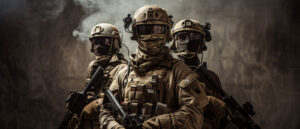
This temporary isolation window enables tactical teams to secure entry points, detain suspects, and control digital evidence before remote wiping, live coordination, or external mobilization can occur. In environments where criminal networks maintain layered lookouts or digital monitoring systems, even a brief interruption can prevent the rapid escalation of violence or flight.
Precision is critical. Modern portable jamming devices used by authorized agencies incorporate output control, band selection, and timing management to minimize unintended interference outside the operational zone. Some units include programmable profiles that allow operators to predefine which frequency bands are affected and for how long. This approach reflects a broader shift toward targeted electromagnetic control rather than broad, indiscriminate disruption.
In counter-organized crime operations, particularly those involving narcotics trafficking, human trafficking networks, or coordinated financial crimes, digital communication suppression has become a tactical multiplier. By temporarily preventing suspects from communicating with external accomplices, law enforcement agencies reduce the risk of coordinated resistance, destruction of evidence, or escape.
The use of such equipment is tightly regulated in most jurisdictions. Radio frequency jamming is typically restricted to authorized government agencies operating under specific legal mandates. Deployment protocols emphasize proportionality, defined operational perimeters, and strict time limits. The goal is to enhance officer safety and operational integrity while maintaining compliance with national telecommunications laws and spectrum regulations.
As criminal organizations continue to exploit ubiquitous wireless connectivity, tactical units adapt by integrating controlled electromagnetic tools into their operational doctrine. Portable GPS and Wi-Fi jammers represent one such capability: a means of creating a brief, localized communication vacuum that can decisively shift the balance during critical enforcement actions.
In an era defined by instant connectivity, the ability to momentarily interrupt that connectivity—precisely, lawfully, and strategically—has become an increasingly important component of modern tactical operations worldwide.